Day 23

Math 216: Statistical Thinking

Bastola

P-Values & Hypothesis Testing: From Evidence to Direction

How do we measure evidence against the null?
P-values quantify it—and the alternative hypothesis tells us which way to look!

Direction of the Alternative Sets the Rule

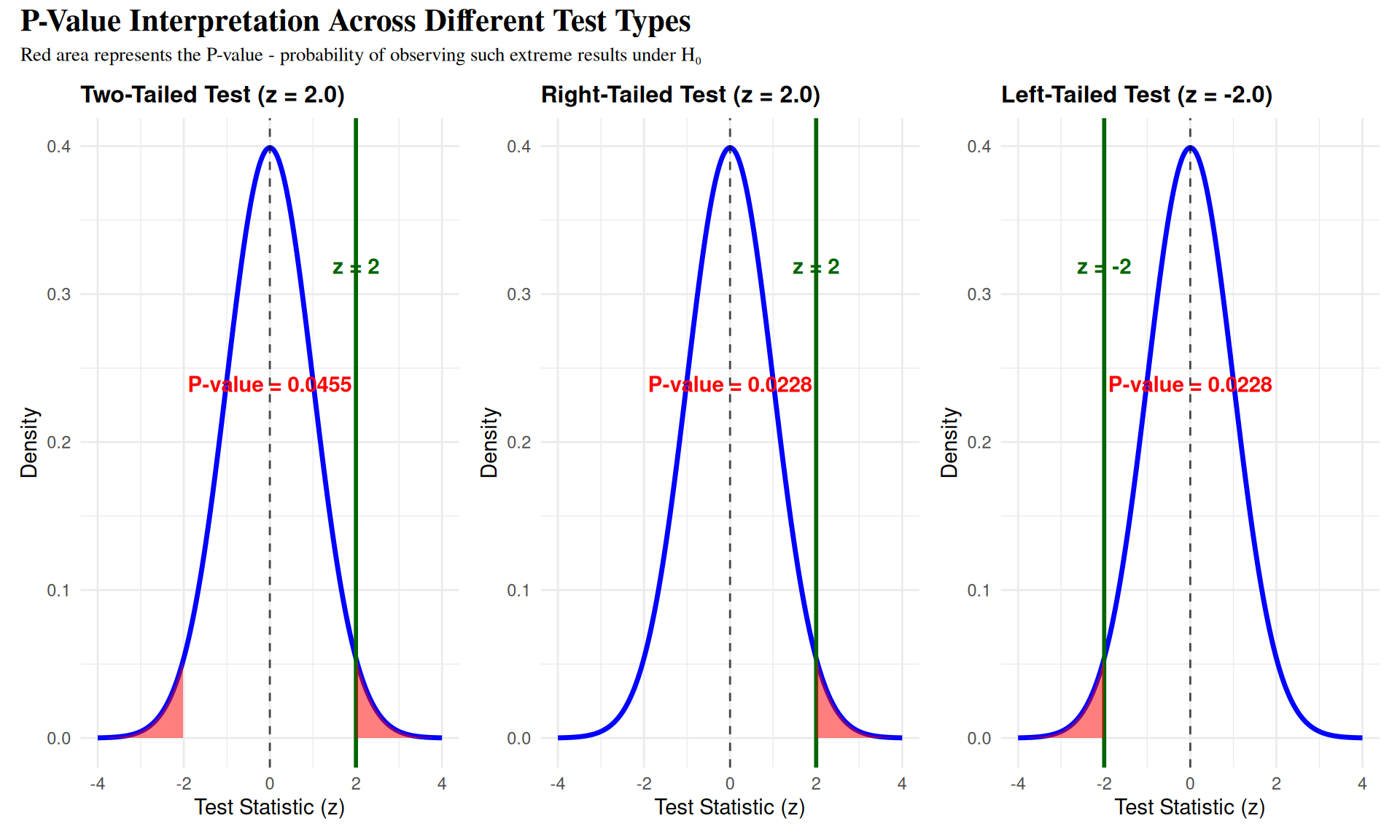
Tail \(H_a\) P-value computes …
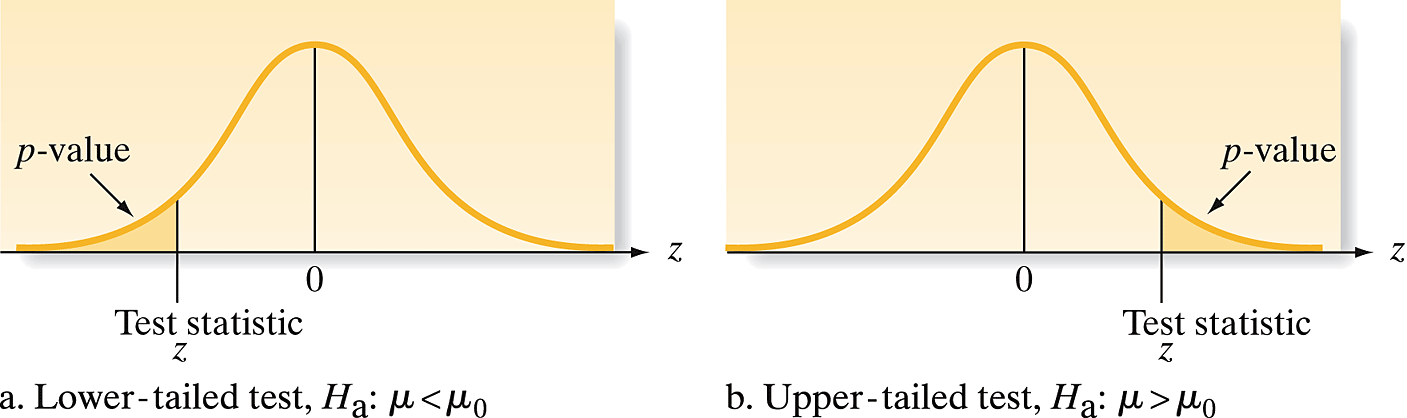
Right \(\mu > \mu_0\) probability in the upper tail
Left \(\mu < \mu_0\) probability in the lower tail
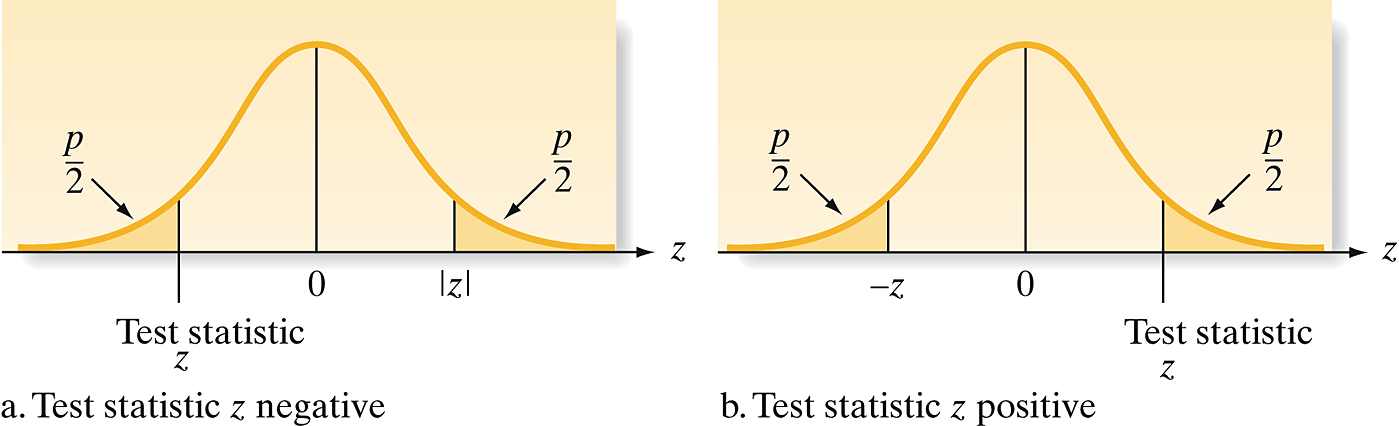
Two \(\mu \neq \mu_0\) probability in both tails

Key: Pick \(H_a\) first; it governs the test direction and the P-value calculation.

Understanding P-Values

P-Value Definition and Interpretation

Core Statistical Concept

P-Value Definition:

  • The \(p\)-value quantifies the level of disagreement between the sample data and the null hypothesis (\(H_0\))
  • It is the probability, assuming \(H_0\) is true, of observing a test statistic as extreme as, or more extreme than, the statistic calculated from the sample data

Key Interpretations:

  • Small P-value (\(p < 0.05\)): Strong evidence against \(H_0\)
  • Large P-value (\(p > 0.05\)): Weak evidence against \(H_0\)
  • Thresholds: 0.05 (significant), 0.01 (highly significant), 0.001 (very highly significant)

Statistical Insight: P-values measure the strength of evidence, not the probability that \(H_0\) is true!

P-Value Calculation Methods

P-Value Formulas by Test Type

Right-Tailed Test: \[p = P(Z \geq z | H_0)\] - Example: Testing if new treatment is better than standard

Left-Tailed Test: \[p = P(Z \leq z | H_0)\] - Example: Testing if new process reduces defect rates

Two-Tailed Test: \[p = 2 \times P(Z \geq |z| | H_0)\] - Example: Testing if new method is different from current

R Implementation:

  • pnorm(z, lower.tail = FALSE) for right-tailed
  • pnorm(z, lower.tail = TRUE) for left-tailed
  • 2 * pnorm(abs(z), lower.tail = FALSE) for two-tailed

Case Study 1: Medical Research P-Value Interpretation

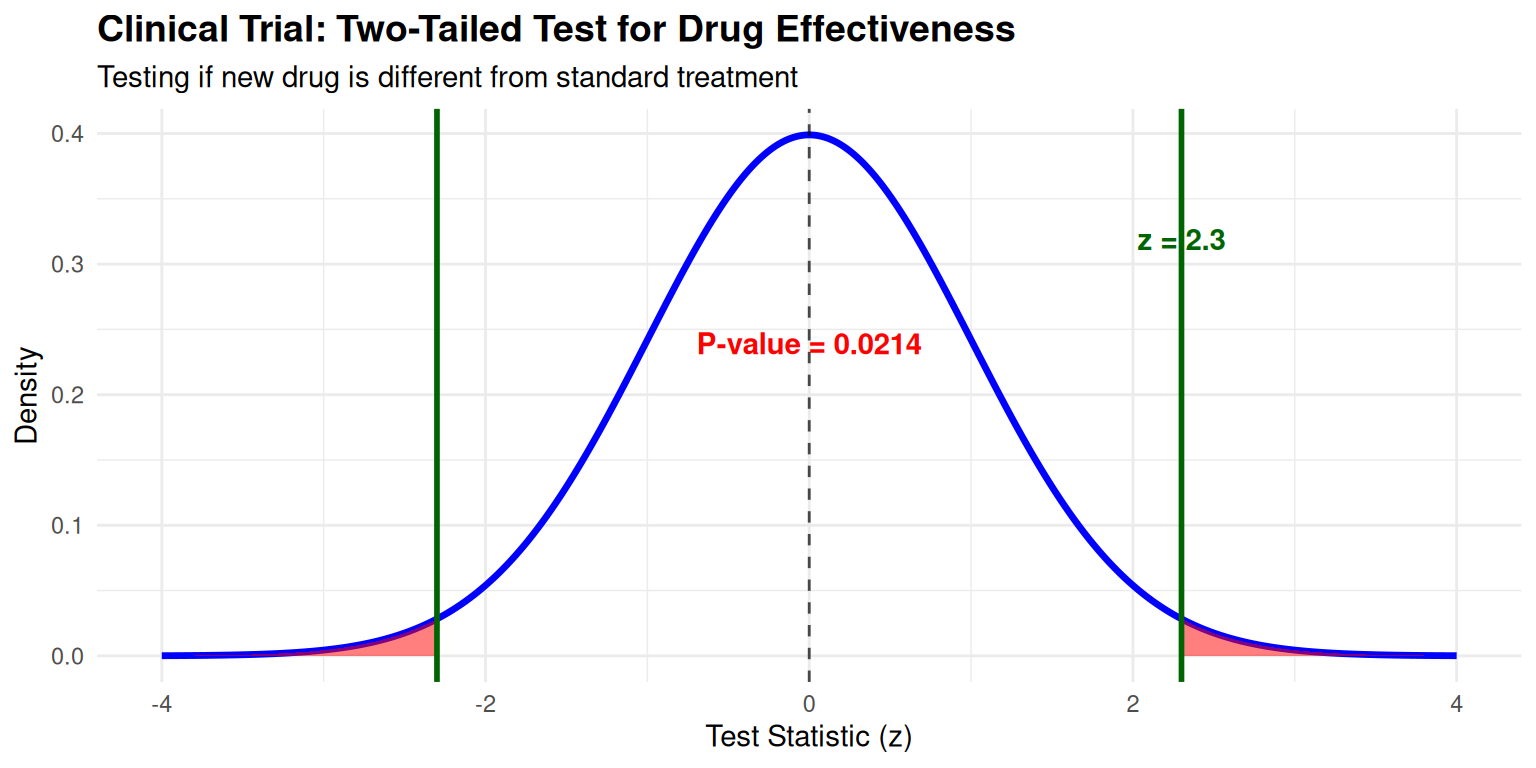
Context: Clinical trial testing new drug effectiveness with sample data showing z = 2.3
Statistical Analysis:

  • P-value Calculation: \(p = 2 \times P(Z \geq |2.3|) = 2 \times (1 - P(Z \leq 2.3)) = 0.0214\)
  • Interpretation: Strong evidence against null hypothesis (\(p < 0.05\))
  • Conclusion: Statistically significant evidence that the new drug differs from standard treatment

Case Study 2: Quality Control P-Value Application

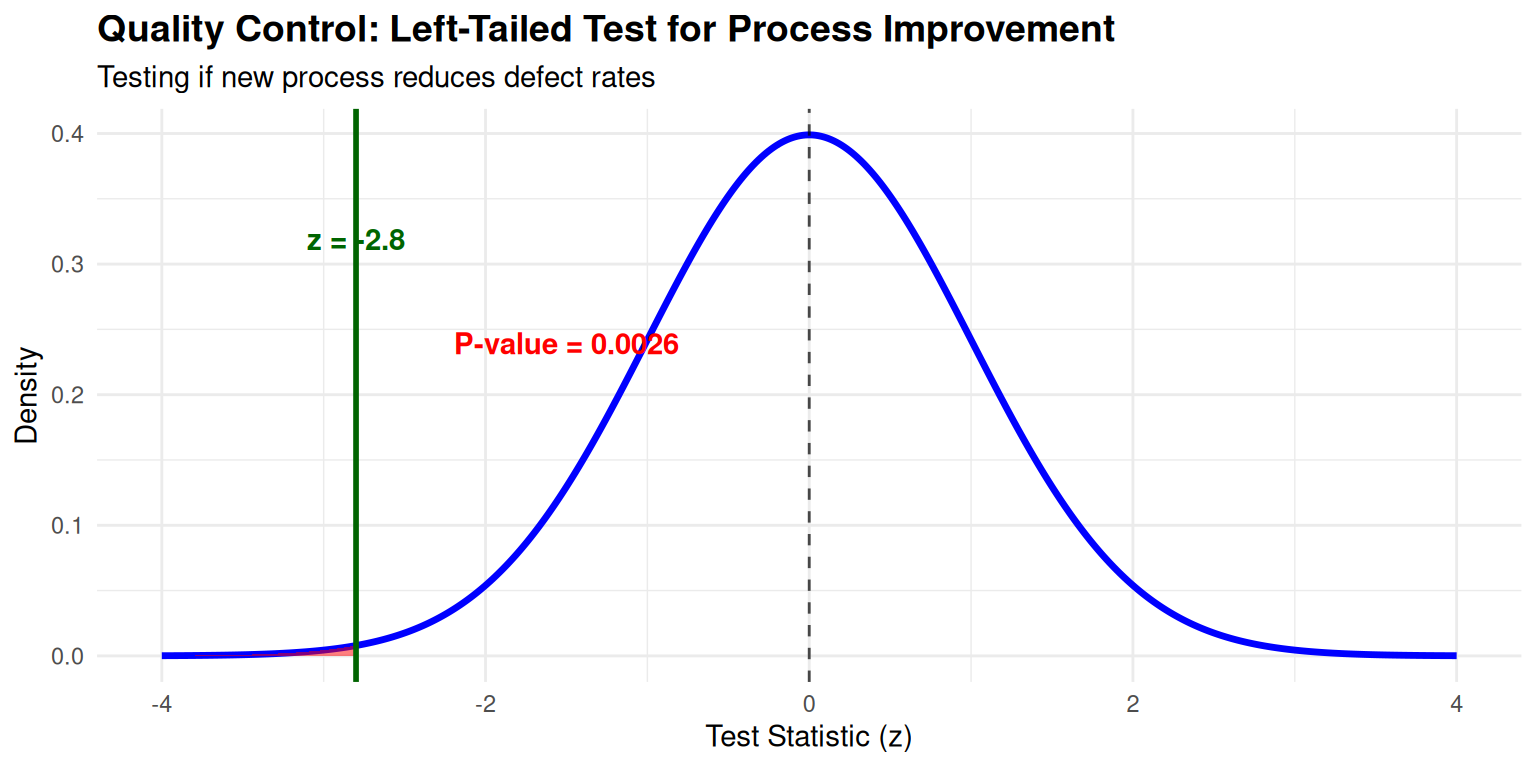
Context: Manufacturing process improvement testing with z = -2.8
Statistical Analysis:

  • P-value Calculation: \(p = P(Z \leq -2.8) = 0.0026\)
  • Interpretation: Very strong evidence against null hypothesis (\(p < 0.01\))
  • Conclusion: Highly significant evidence that the new process reduces defect rates

P-Value Calculation Exercises

Practical P-Value Calculations Using R

Exercise 1: Two-Tailed Test P-Value

  • Test statistic: z = 1.96
  • P-value calculation: 2 * pnorm(1.96, lower.tail = FALSE)
  • Result: p = 0.05 (exactly at significance threshold)
  • Interpretation: Marginal evidence against null hypothesis

Exercise 2: Right-Tailed Test P-Value

  • Test statistic: z = 2.5
  • P-value calculation: pnorm(2.5, lower.tail = FALSE)
  • Result: p = 0.0062
  • Interpretation: Strong evidence against null hypothesis

P-Value Calculation Exercises

Practical P-Value Calculations Using R

Exercise 3: Left-Tailed Test P-Value

  • Test statistic: z = -1.75
  • P-value calculation: pnorm(-1.75, lower.tail = TRUE)
  • Result: p = 0.0401
  • Interpretation: Evidence against null hypothesis at 5% level

Exercise 4: Real-World Interpretation

  • Market research: z = 2.1, p = 0.0357
  • Interpretation: Statistically significant evidence of consumer preference change
  • Business decision: Strong evidence to support marketing strategy change

Key Statistical Principles

Essential P-Value Concepts:

  1. Evidence Quantification: P-values measure strength of evidence against null hypothesis
  2. Statistical Significance: Thresholds (0.05, 0.01, 0.001) provide decision criteria
  3. Test Type Selection: Right-tailed, left-tailed, or two-tailed based on research question
  4. Interpretation Framework: Focus on evidence strength, not absolute certainty

Statistical Guidelines:

  • Significance Level: Choose appropriate α level for research context
  • Test Direction: Match test type to alternative hypothesis
  • Evidence Interpretation: Small P-values indicate strong evidence against H₀
  • Practical Significance: Consider both statistical and practical importance

Common P-Value Misinterpretations

  • NOT: Probability that H₀ is true
  • NOT: Probability that Hₐ is false
  • NOT: Measure of effect size
  • NOT: Probability of Type I error for specific test

Next Topic: Extending P-value framework to different types of hypothesis tests